Category: Alberta Real Estate Market Update
-

Developers Get Creative With Incentives
Some developers offered to cover up to one year of mortgage payments on new homes. The offer capped at about $50K, suggesting homes around $1M, with move-in by end of 2026. Experts say buyer incentives grow during slow markets, and perks are more common now. Another builder offered up to a year of property taxes,…
-

Edmonton Council Supports Balanced Infill with Height Adjustment
Edmonton city council voted to reduce the maximum height for infill developments from 10.5 to 9.5 metres starting in August. This change aims to balance increasing housing units with preserving neighborhood character. New setback rules were also introduced last summer. Some community members welcome the reduction but call for a deeper review of zoning bylaws…
-

Happy Victoria Day
The holiday has been observed since 1845, as a celebration to honour Queen Victoria. The day unofficially signals the start of summer for many Canadians. It is celebrated with parades and fireworks in some cities. Sending our warmest wishes to everyone for a happy and peaceful long weekend.
-

Le gouvernement du Canada annonce un nouveau plan de 1,7 G$ pour stimuler l’offre de logements
Le gouvernement canadien a présenté le projet de loi C-26, qui propose un fonds de 1,7 milliard de dollars destiné à accroître l’offre de logements grâce à des transferts aux provinces et territoires partenaires. Ce financement vise à stimuler la construction et à protéger les emplois dans le secteur résidentiel en période d’incertitude économique. L’impact…
-

Where to Buy Real Estate in Canada 2026: Edmonton
Top Edmonton neighbourhoods for real estate in 2026 include Secord, Terwillegar South, and Haddow. Secord offers steady growth with a median income of $125,588 and upcoming transit improvements. Terwillegar South is family-oriented with a perfect economic score and walkable design. Haddow features high demand, a 19% growth rate, and proximity to green spaces. Edmonton's market…
-

How Will Inflation Shape Canada’s Housing Market Through 2026?
Oil-driven inflation spike raised rate hike risks, pushing fixed mortgage rates higher in early 2026. Higher borrowing costs and uncertainty slowed spring activity despite peak seasonal demand expectations. CREA revised forecats: -Home sales: 474,972 units, ↑ 1% yearly. -Avg home price: ↑ 1.5% to $688,955 2027 outlook: sales up 2.1% to 485,071, prices +0.9% to…
-
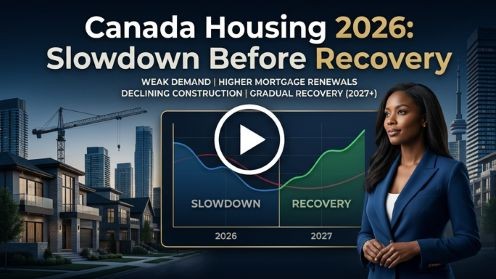
Canada Housing 2026: Slowdown Before Recovery
Canada’s housing market is entering a slower phase, with weak demand, cautious buyers, and modest price growth expected through 2026 and into 2027. Economic slowdown, higher mortgage renewals, and weak income growth are limiting affordability, keeping home sales below historical averages nationwide. Construction activity is declining, especially in condo-heavy markets like Toronto and Vancouver, reducing…
-

Canada Housing Starts Lose Momentum
Canada’s housing starts softened again in Late-Q1 2026. The annualized pace ↓6% MoM to 235,852 units, while the 6-mo trend ↓2.9% to 248,378. Actual starts in larger population centers still ↑10% yearly to 16,398 in Late-Q1, lifting the year-to-date total to 49,206, up 9% from 2025. An economist said the yearly gain mostly reflected an…
-

Happy Mother’s Day
Mother’s Day celebrates the love, strength, and sacrifices of moms everywhere, with their guidance, care, and inspiration across cultures worldwide. Celebrating amazing moms! Your strength, kindness, and care inspire everyone around you—today we honor you and all that you do. Enjoy pampering, hugs, and smiles, knowing your love and dedication make the world a better…
-

La solidité des bilans des ménages canadiens se maintient au T4/25
La valeur nette des ménages canadiens a progressé de 1,3 % pour atteindre 18,6 billions $ au quatrième trimestre, portée par la hausse des actifs financiers malgré une baisse de 2,2 % des prix des logements. Le ratio du service de la dette a légèrement reculé à 14,57 %, soutenu par la croissance des revenus…
-

Saving for a home in Edmonton is 76 years faster than in Vancouver
In Edmonton, it takes about seven years to save for a down payment, thanks to affordable home prices ($571,372) and strong after-tax incomes. Winnipeg is faster at six years due to even lower prices. Calgary and Montreal require around nine years. In contrast, Vancouver and Toronto have the longest timelines, taking over 70 years to…
-

Canada Incentives Need More Homes
Canada's housing agency warned buyer incentives can lift demand faster than supply, pushing prices higher when housing stock stays limited and affordability remains under pressure. Its modelling found targeted demand-side measures would need ~7.8K extra housing starts yearly to offset added demand and avoid worsening affordability. Broad-based buyer incentives could require up to 28K new…
-

Spring Real Estate Turns More Balanced
This spring market no longer moved in one direction. Conditions varied by neighbourhood and city, with some areas cooling while others stayed highly competitive. More inventory gave buyers more choices and eased bidding pressure. Secondary cities, suburbs, and pandemic boom areas showed softer pricing and better negotiation openings. Homes sitting for several weeks often signaled…
-

Is Alberta Still Outperforming in 2026
Home price growth expected around 3% to 5%, strongest in Canada Calgary and Edmonton continue to benefit from strong interprovincial migration Sales activity above national Canadian recovery average Entry-level supply remains tight, supporting price strength
-

Real Estate Market Shows Steady Performance: MSCI/REALPAC
The MSCI/REALPAC Canadian Property Index showed a 1.3% total return in 2025, down from 3.21% in 2024, with income return at 4.93% and capital growth at -2.7%. Industrial properties led returns at 2.9%, while retail and residential lagged. Halifax had the highest city return at 7.16%. Transaction volume rose 4% to $44.2 billion, with increased…
-

Est-ce le bon moment pour acheter une maison au Canada ?
Le marché immobilier canadien se refroidit, avec des tendances de prix inégales selon les régions et des taux d’intérêt stabilisés autour de 2,25 %. Les prix restent élevés, mais les surenchères sont moins fréquentes, offrant de meilleures marges de négociation. Les conditions varient d’une région à l’autre, certaines favorisant les acheteurs, d’autres les vendeurs. Une…
-

‘The frenzy is gone’: But demand for homes still remains strong in Edmonton
Edmonton's resale real estate market shows strong demand despite a 14% drop in resales and a 4% rise in new listings year over year. Average home prices rose slightly, with detached homes averaging $590,162, remaining affordable compared to other cities. Apartment condos face oversupply and declining prices. Rising oil prices due to global tensions may…
-

What Does Rupture Mean for Real Estate?
Canada’s real estate shifts amid lower immigration, the inflation-rate balance, and regional divides. The era of frenzied growth and rapid price gains is over; the market has cooled since the COVID peak. Short-term prices likely stable; long-term uncertain amid fast-changing global conditions. Buyers and sellers should research, do due diligence, and rely on trusted pros…
-

Buyers Return, Edmonton Market Softens
Slide 1 Greater Edmonton market saw 2,133 sales in March 2026, down 14% year-over-year. Slide 2 New listings reached 3,809, up 30.6% monthly and 4.2% yearly. Slide 3 Inventory rose 13.8% monthly and 31.6% higher than last year. Slide 4 Average home price hit $470,819, up 3.4% monthly and 2.2% yearly. Slide 5 Detached homes…
-
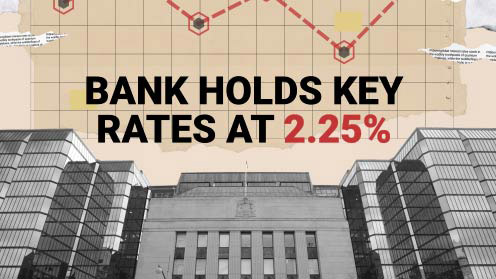
Bank Holds Key Rates at 2.25%
Bank of Canada held rates at 2.25% as expected, citing weaker growth, soft labor market, and rising inflation risks globally. Middle East conflict pushed oil and gas prices higher, tightening financial conditions, increasing volatility, and complicating policy outlook amid uncertainty. After aggressive cuts from 2024 to 2025, Bank signals data dependence; next decision expected April…